How to Put On a No-Pull Dog Harness
When walking your dog, it is important to have a good harness that will keep them safe and comfortable—and that is where a no-pull harness comes in handy.
A no-pull dog harness is a type of harness that is designed to discourage dogs from pulling on their leash.
Typically, no-pull dog harnesses have a front clip attachment point that helps to redirect the dog’s forward motion.
This can be especially helpful for dogs that are strong pullers or those that are resistant to traditional collar and leash training.
In addition to the front clip, no-pull dog harnesses also often feature an adjustable chest strap and padded construction for added comfort.
No pull dog harnesses can be helpful for training pulling dogs and are sometimes only used as part of a positive reinforcement-based training program.
How a No-Pull Harness Works

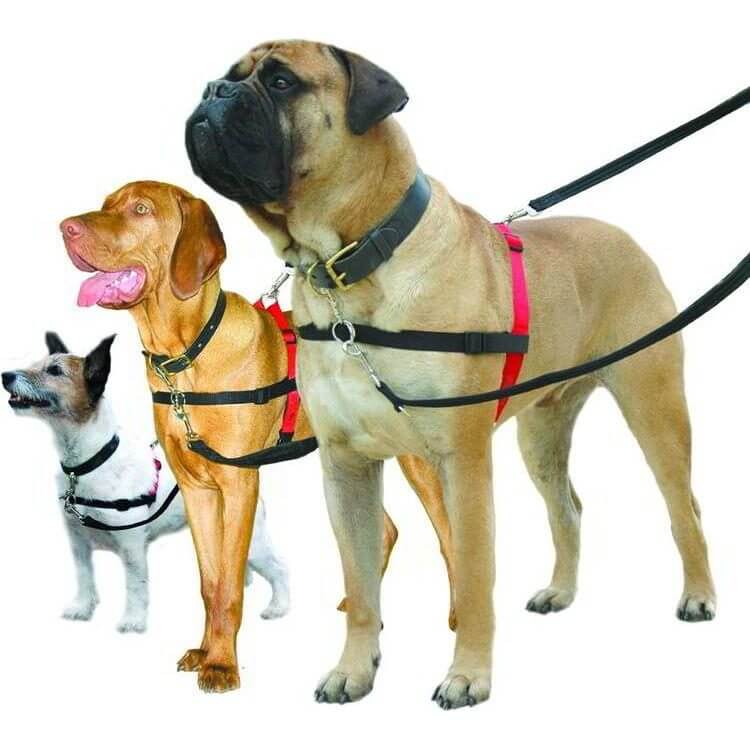
The harness works by attaching to your dog’s chest and back, which gives you more control over their movements.
The front clip of the harness attaches to your dog’s chest, while the back clip attaches to its back.
This design helps to distribute the force of the leash evenly across their body, making it more difficult for them to pull.
To get a better understanding of how this leash works, let’s have a look at the different parts and their function.
- Leash Attachment Points: As mentioned above, the front leash attachment point helps to redirect your dog’s forward motion and discourages pulling. The back leash attachment point functions like a traditional harness, allowing you to control your dog’s movements while walking or running.
- Chest Strap: This adjustable strap goes across your dog’s chest and it helps provide a secure fit for the harness. It also helps to evenly distribute the force from the leash.
- Padding: No-pull dog harnesses typically have added padding for your dog’s comfort, especially around pressure points like the chest and underarms.
Granted, there are different brands of no-pull dog harnesses on the market with some notable differences but the above parts are standard for all brands.
How to Put On a No-Pull Dog Harness

Here is a step-by-step guide on how to fit a no-pull harness on your dog.
- First, loosen all straps and have your dog stand or sit in a comfortable position.
- Place the harness over their head and adjust the chest strap so that it sits snugly across their chest, leaving enough room for two fingers to fit under the straps.
- Secure the back strap just behind your dog’s front legs, making sure it is not too tight or restrictive.
- Attach the leash to the front clip for training purposes, or the back clip for regular walks.
- Make any final adjustments to ensure a secure and comfortable fit for your dog.
When using a no-pull harness, it is important to remember that it should always be used as part of a positive reinforcement-based training program.
This means rewarding good behavior, such as walking calmly, with treats or praise.
It is also important to make sure that the harness fits properly and is not too restrictive for your dog.
If you have any concerns about proper fitting or usage, consult a professional trainer or veterinarian for advice.
Does A No-Pull Harness Really Work?
While no-pull harnesses are not a magical solution for all pulling behaviors, they can be helpful tools in training and managing strong pullers.
As with any training program, consistency and patience are key to success.
It is also important to remember that there may be underlying reasons for your dog’s pulling behavior such as boredom or lack of exercise, and addressing these issues can also help in reducing pulling.
Overall, using a no-pull harness as part of a positive reinforcement-based training program can be a useful tool in managing and reducing pulling behavior in dogs.
Will A No-Pull Harness Hurt Your Dog?
There are several different designs of no-pull harnesses, but they all work in basically the same way.
The harness attaches to the dog’s chest and back, and when the dog tries to pull, the pressure is distributed evenly across the chest, which makes it uncomfortable for the dog and encourages them to stop pulling.
No pull harnesses are very effective at stopping dogs from pulling, but some people worry that they may be painful for the dog.
However, as long as the harness is fitted correctly, it should not cause any pain or discomfort.
In fact, dogs that are pullers are more likely to be harmed with an ordinary harness which is why experts recommend using no-pull harnesses.
How To Get Your Dog Used To A No-Pull Harness?

If your dog is new to wearing a harness, it’s important to introduce it slowly and positively.
Start by simply letting them wear the harness inside for short periods, before progressing to walks with the leash attached.
During this acclimation period, be sure to reward your dog with treats or praise for positive behavior and interactions with the harness.
It is also important to keep training sessions short, especially in the beginning, and end them on a positive note.
This will help your dog associate the harness with good things and make them more willing to wear it.
With patience and consistent training, your dog can quickly become comfortable wearing their no-pull harness for walks or other activities.
Summary
No-pull harnesses can be a helpful tool in training and managing strong pullers, but only when done the right way.
For starters, use them as part of a positive reinforcement-based training program.
Also, proper fit and slow acclimation can help your dog become comfortable with wearing the harness.
With patience and consistency, using a no-pull harness can have great results in reducing pulling behavior in your dog.
Related Posts:
Can A Dog Wear A Collar And A Harness At The Same Time?
10 Best Search and Rescue Dog Harnesses
Image sources: 1, 2, 3, 4